
FSHD
One gene that should stay silent. A slow wave of muscle weakness. Facioscapulohumeral muscular dystrophy is among the most common yet underserved myopathies.
CYTOO’s MyoScreen™ platform recapitulates key FSHD hallmarks in micropatterned human myotubes, delivering sensitive, high-content readouts to assess therapeutic candidates from DUX4-targeting approaches to functional phenotype correction.
CYTOO's approach
At Cytoo, leveraging our MyoScreen™ platform, we have developed a suite of robust, highly reproducible cell-based assays that faithfully recapitulate key pathological features of FSHD. Combined with high-content imaging and AI-driven image analysis, this integrated platform allows precise, quantitative assessment of DUX4 expression and its downstream pathways.
Together, these tools provide a powerful framework for evaluating therapeutic mechanisms, comparing compound efficacy, and guiding early-stage selection of the most promising candidates for FSHD drug development.
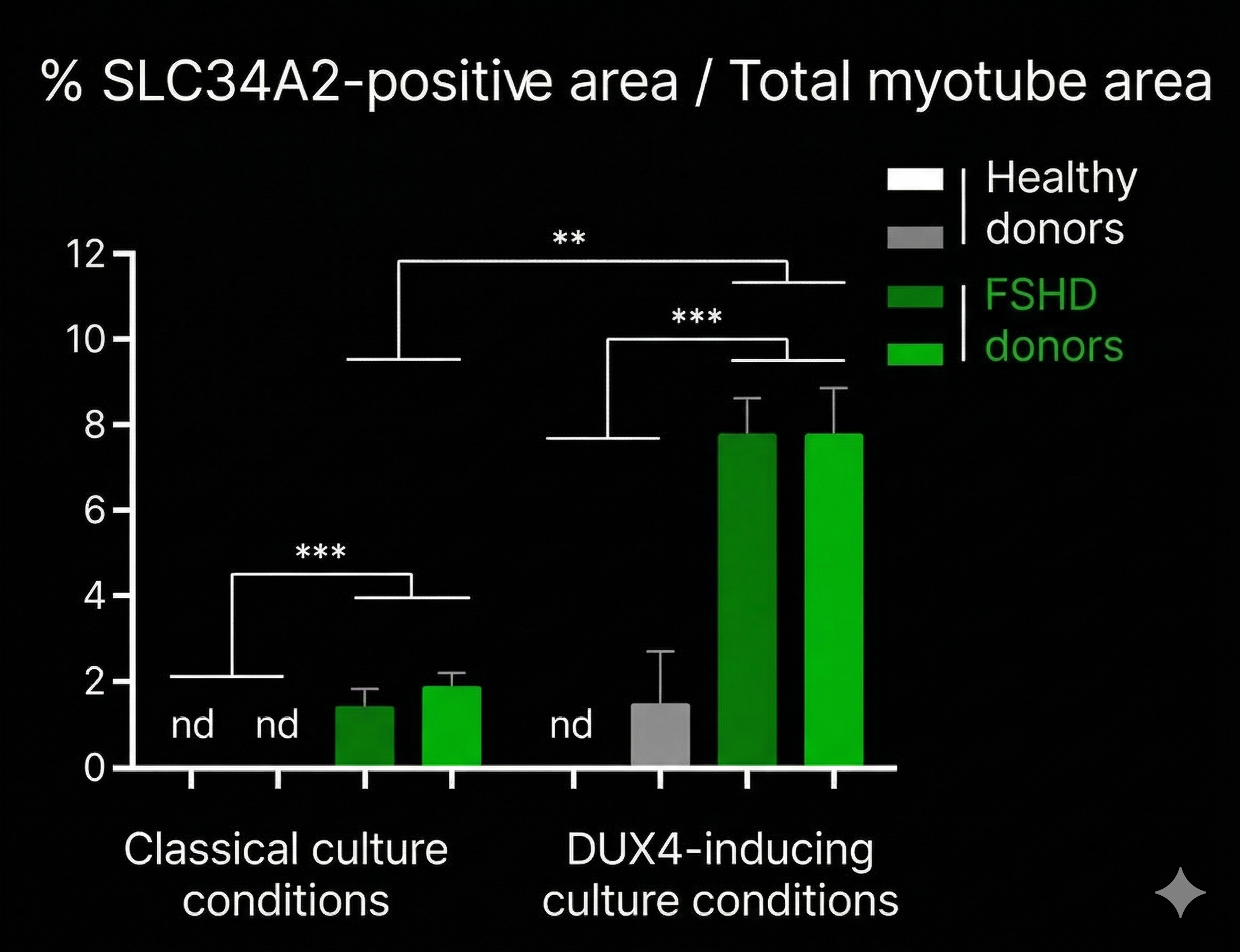
Increased expression of SLC34A2, Zscan4, LEUTX in FSHD donors compared to Healthy donors
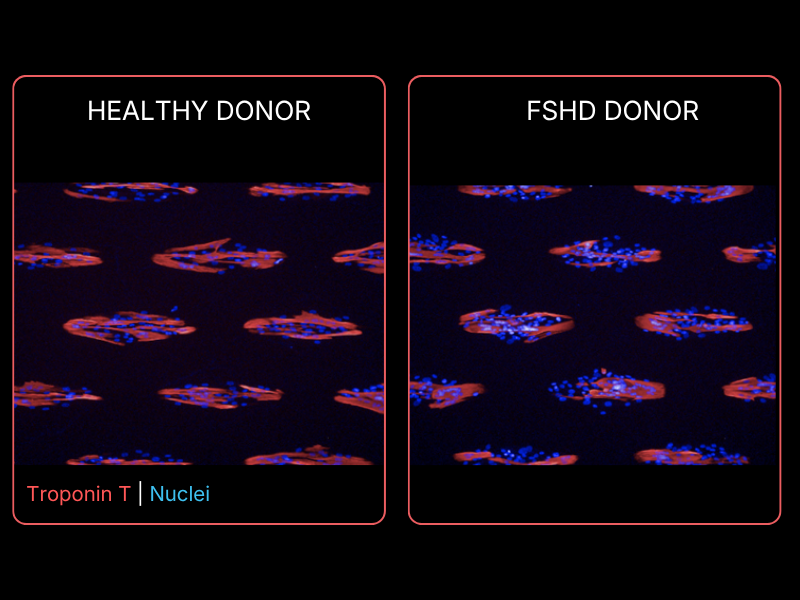
About FSHD
Facioscapulohumeral muscular dystrophy (FSHD) is a genetic muscle disorder affecting about 1 in 8 000 people, caused by inappropriate DUX4 expression that leads to progressive weakness of facial and shoulder-girdle muscles. DUX4 also activates normally silent genes such as SLC34A2, LEUTX, ZSCAN4, contributing to muscle pathology.
DUX4-driven hallmarks include: transcriptional dysregulation, oxidative stress, immune activation, impaired muscle regeneration, membrane damage and apoptosis.
Explore our catalog of characterized donors and readouts
How can we work together
Everything is tailored to your needs through a flexible R&D partnership model that fosters true collaboration and innovation. We offer adaptable project structures and FTE allocation to fit your goals.