DMD
One missing protein. A cascade of muscle damage. Duchenne muscular dystrophy remains one of the most challenging neuromuscular diseases.
CYTOO’s MyoScreen™ platform captures the complexity of DMD through physiologically relevant human muscle models, enabling precise, high-throughput evaluation of therapeutic strategies — from dystrophin restoration to downstream rescue.
CYTOO's approach
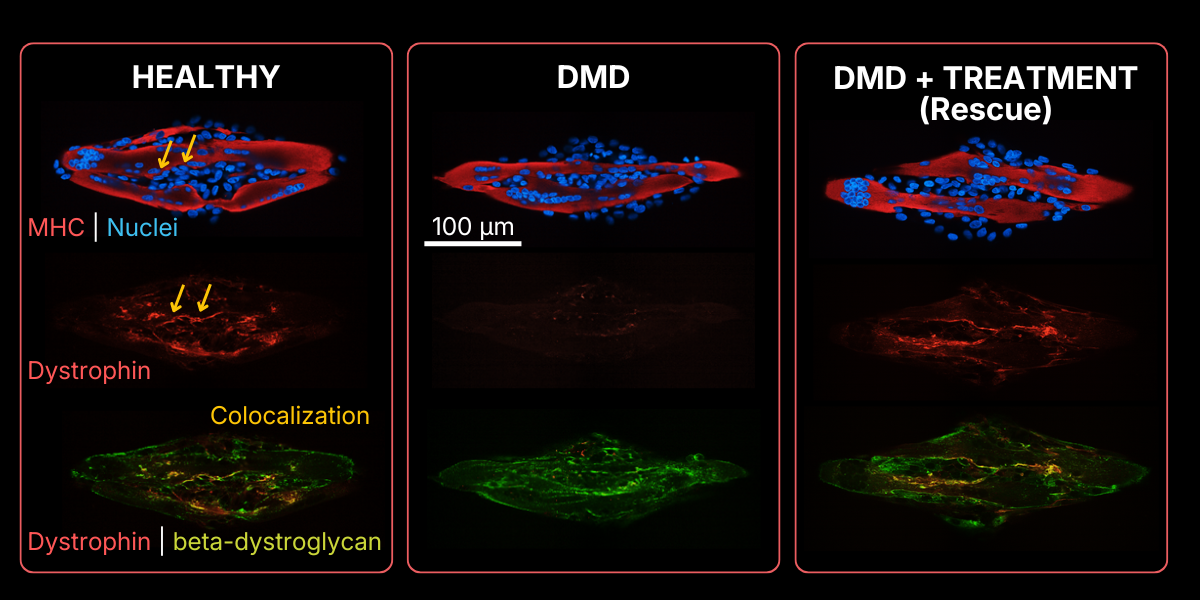
At CYTOO, our MyoScreen™ platform relies on physiologically relevant micropatterned muscle cultures generated from primary donor cells to model key aspects of dystrophin deficiency. Leveraging this model, high-content imaging and AI-based analysis deliver highly sensitive readouts of structural and functional DMD phenotypes.
These readouts allow for the evaluation of therapeutic strategies targeting dystrophin restoration, and localization, inflammation, mitochondrial health, and other downstream consequences of dystrophin loss.
Overall, CYTOO’s technologies offer an end-to-end platform that spans the entire Duchenne drug development pipeline, from early candidate identification to advanced potency assay development ahead of commercialization.
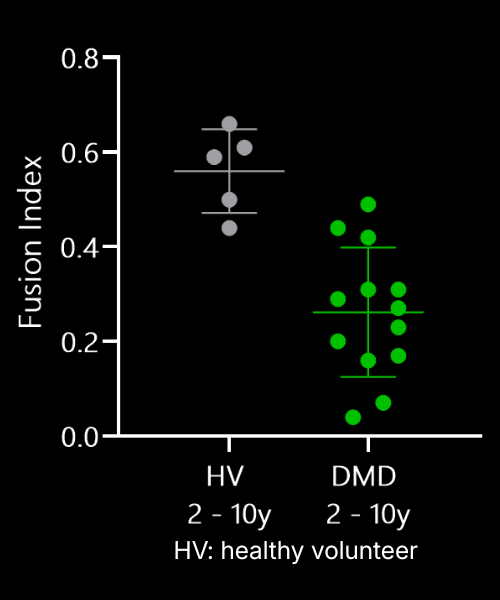
Fusion index : % of nuclei in multinucleated myotubes, indicating the level of differentiation
About DMD
Duchenne muscular dystrophy (DMD) is a severe and progressive X-linked neuromuscular disorder affecting approximately 1 in 5,000 male births. It is caused by mutations in the DMD gene, leading to the absence of functional dystrophin, a structural protein essential for maintaining the integrity of muscle fibers.
Without dystrophin, muscle cells become highly susceptible to contraction-induced damage, initiating a cascade of pathological events, including chronic membrane instability, altered calcium homeostasis, mitochondrial dysfunction, sustained inflammation, and increased oxidative stress.
These cumulative events impair regenerative capacity, promote fibrotic and fatty tissue replacement, and ultimately drive the progressive loss of muscle function characteristic of the disease. Beyond skeletal muscle, DMD also affects cardiac and respiratory systems, making it a life-limiting condition with limited treatment to date.
Explore our catalog of characterized donors and readouts
How can we work together
Everything is tailored to your needs through a flexible R&D partnership model that fosters true collaboration and innovation. We offer adaptable project structures and FTE allocation to fit your goals.