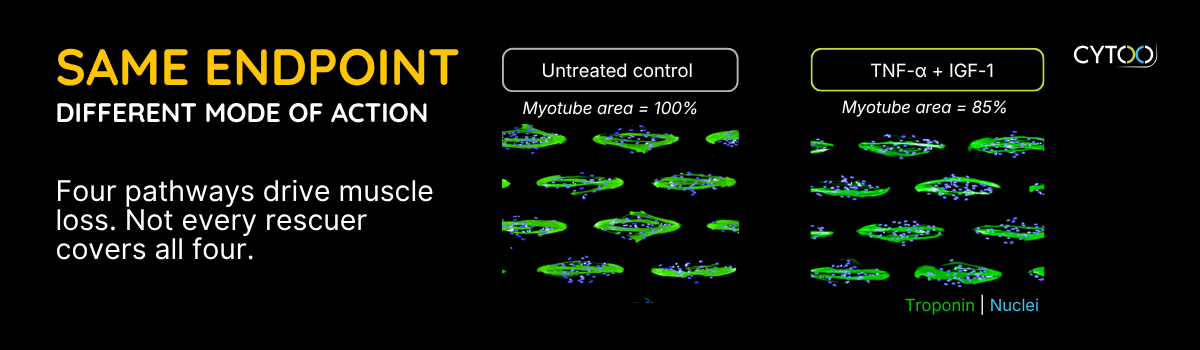
Muscle wasting is driven by four main signaling axes: IGF-1/Akt/mTOR suppression, TGF-beta family activation via Smad2/3, pro-inflammatory cytokine signaling through NF-kB, and glucocorticoid-driven atrogene expression. All four result in the same outcome: accelerated protein breakdown and suppressed protein synthesis. A single measurement of myofibre size cannot tell these pathways apart.
So we separate them upstream.
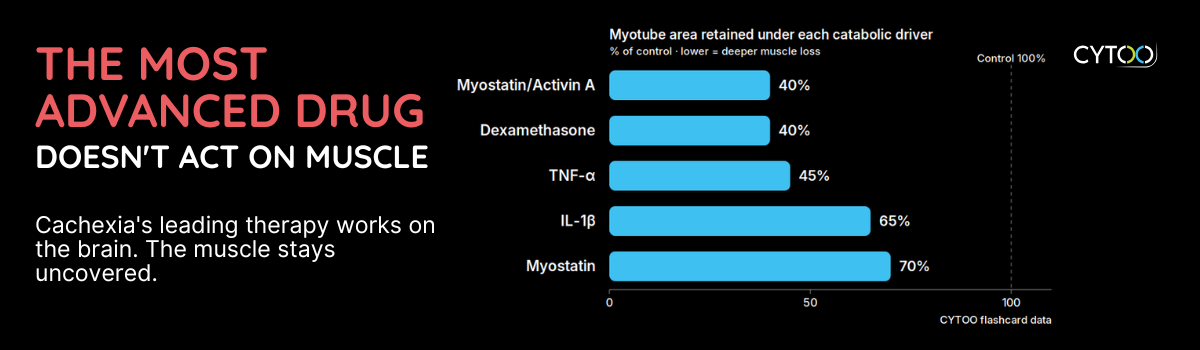
On MyoScreen, we induce each axis independently in primary human skeletal muscle myotubes, using TNF-alpha, myostatin or myostatin/activin A, IL-1beta and dexamethasone, on donors pre-validated for responsiveness to all four pathways.
Treatment can be applied during myoblast differentiation or on fully differentiated myotubes, so you capture mode of action and therapeutic window, not just an endpoint.
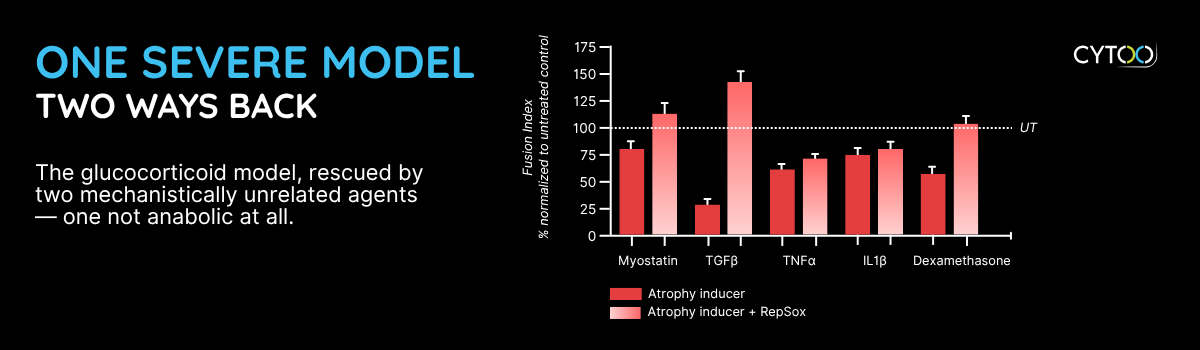
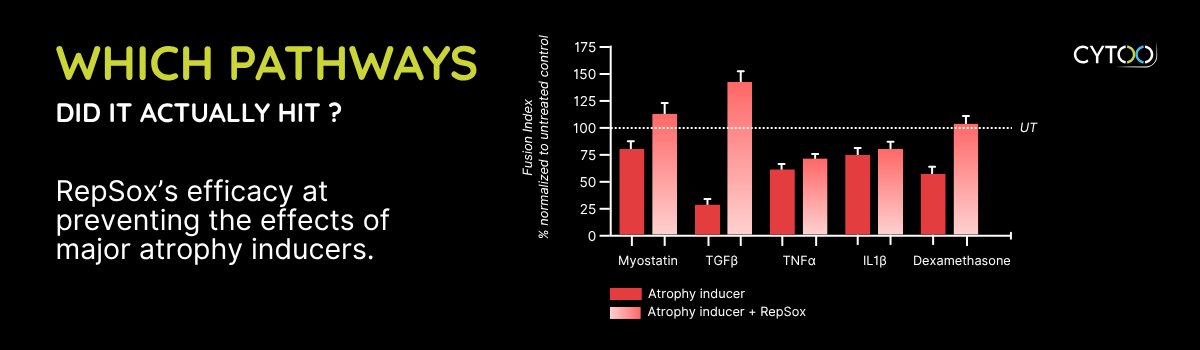
Run a candidate across all five atrophiants and a pattern appears. In our reference data set, one rescuer restores all four signaling pathways. Another restores exactly one.
That contrast is a mode of action fingerprint, and it is the difference between a targeted agent and a broad anabolic one.
Which rescuer does what is in the flashcard :