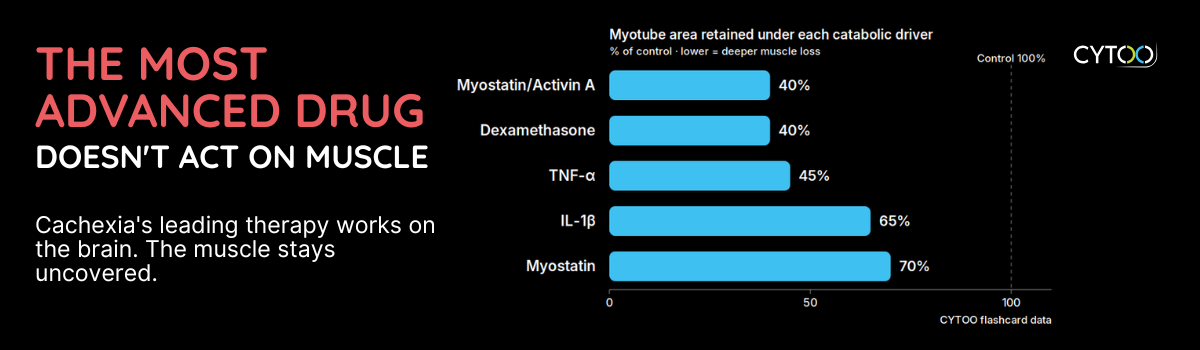
Ponsegromab targets GDF-15, which signals through the GFRAL receptor in the hindbrain. It works on appetite and energy expenditure. In the phase 2 PROACC-1 trial it produced a 2.81 kg weight gain over placebo at the highest dose (NEJM, 2024), and it is now in the phase 2b/3 RIVER-mPDAC study in metastatic pancreatic cancer. Real progress, and an important mechanism.
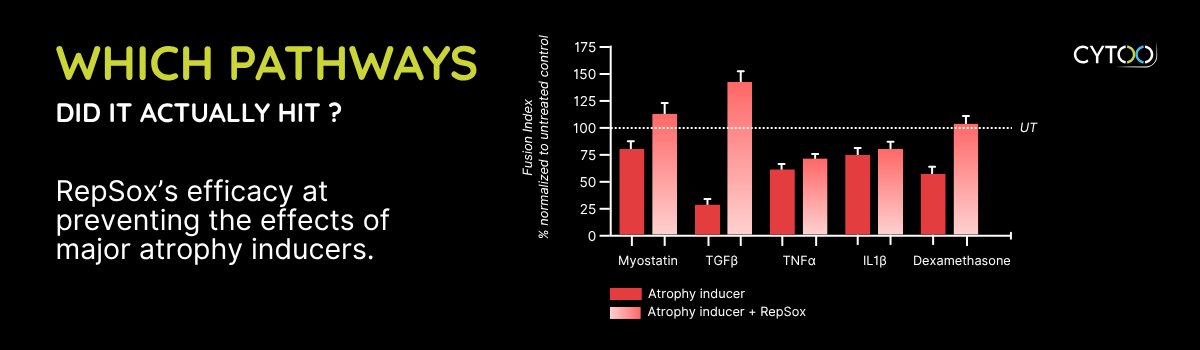
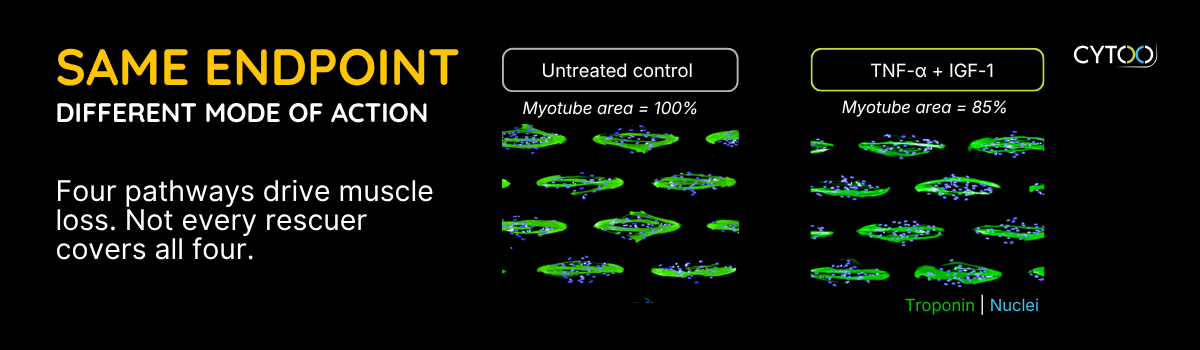
But it is a central mechanism. The direct catabolic assault on the myotube is a separate problem, and it remains largely uncovered. That assault is not one signal. Cachexia is inflammatory and multifactorial: TNF-alpha and IL-1beta through NF-kB and STAT3, TGF-beta family signalling through Smad2/3, glucocorticoids driving MuRF1 and Atrogin-1. They converge on the ubiquitin-proteasome system, and they rarely arrive alone.
The context makes it urgent. Cachexia affects 50 to 80% of patients with advanced cancer and accounts for up to 20% of cancer deaths (Nature Reviews Clinical Oncology, 2023). Patients losing muscle tolerate chemotherapy less well, which drives dose reductions and delays. There is still no approved therapy in the US or Europe.
We model those drivers directly, one axis at a time, in primary human myotubes. And we run myotoxicity in the same system, on the same donors, with the same readouts, benchmarked against a reference myotoxicity compound library. So you can ask two questions in one study: does my agent protect the myotube, and does my chemotherapy backbone damage it.